
3D Scanning Solutions
Detect Robot Cell Drift Before It Causes Collisions
A practical inspection playbook for fixtures, jigs and robot grippers using handheld 3D scanning
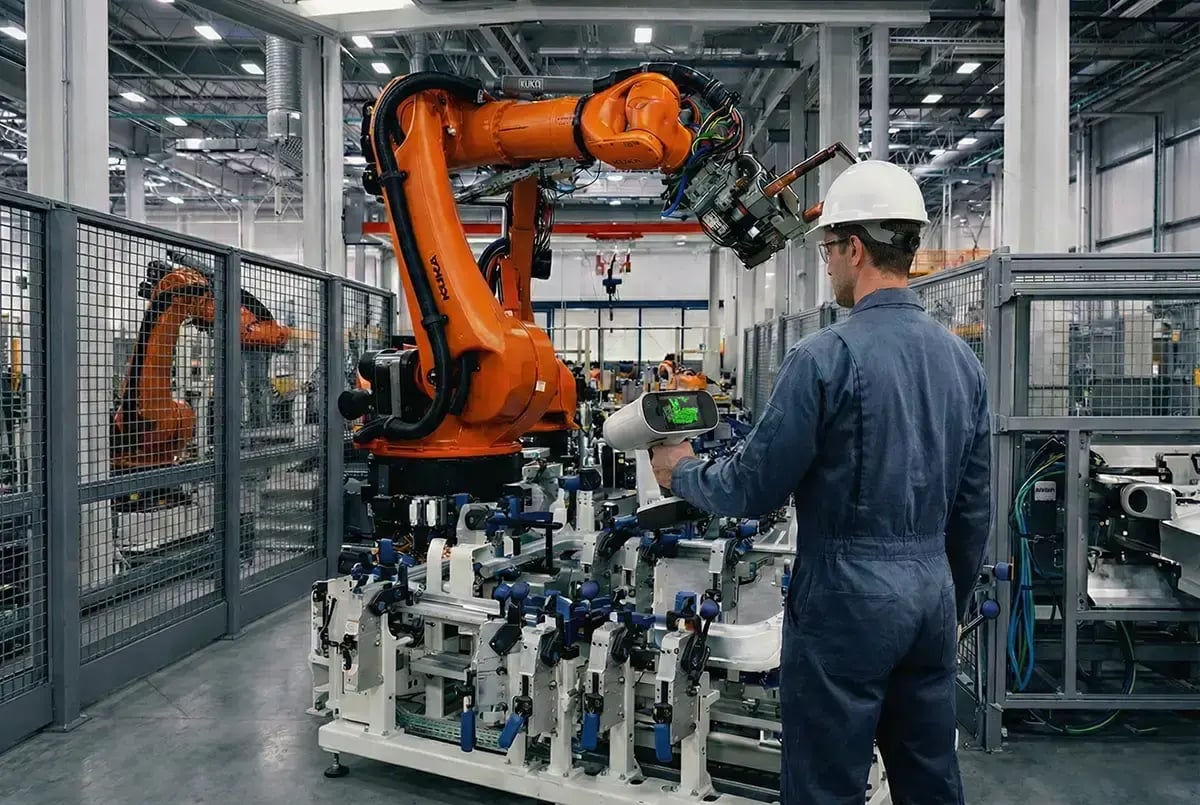
CAD Rarely Reflect What’s Really Happening in Your Robot Cell
Robot production cells often run for years. During that time:
Fixtures are adjusted during maintenance
Mounting points, stops and datum surfaces get tweaked over time to keep parts running and hit quality targets.
Grippers are repaired or modified
Fingers, pads and brackets are replaced or reworked to restore grip, compensate for wear, or handle new variants.
Temporary fixes become permanent
Quick shims, spacer plates and “just-for-now” brackets often stay in place because they work and downtime is expensive.
CAD is rarely updated to reflect these changes
The digital model lags behind the shop-floor reality, so the latest tweaks never make it back into engineering data.
Teams are comparing live equipment to outdated design intent
When a collision or clearance problem hits, people end up troubleshooting against an old baseline that no longer matches what’s actually in the cell.
A Scan-to-Scan Inspection Approach Built for Live Production
Instead of relying on CAD, this playbook shows how to:
- Capture a golden reference 3D scan of a working cell
- Rescan fixtures and grippers after an incident
- Compare scans to detect physical change
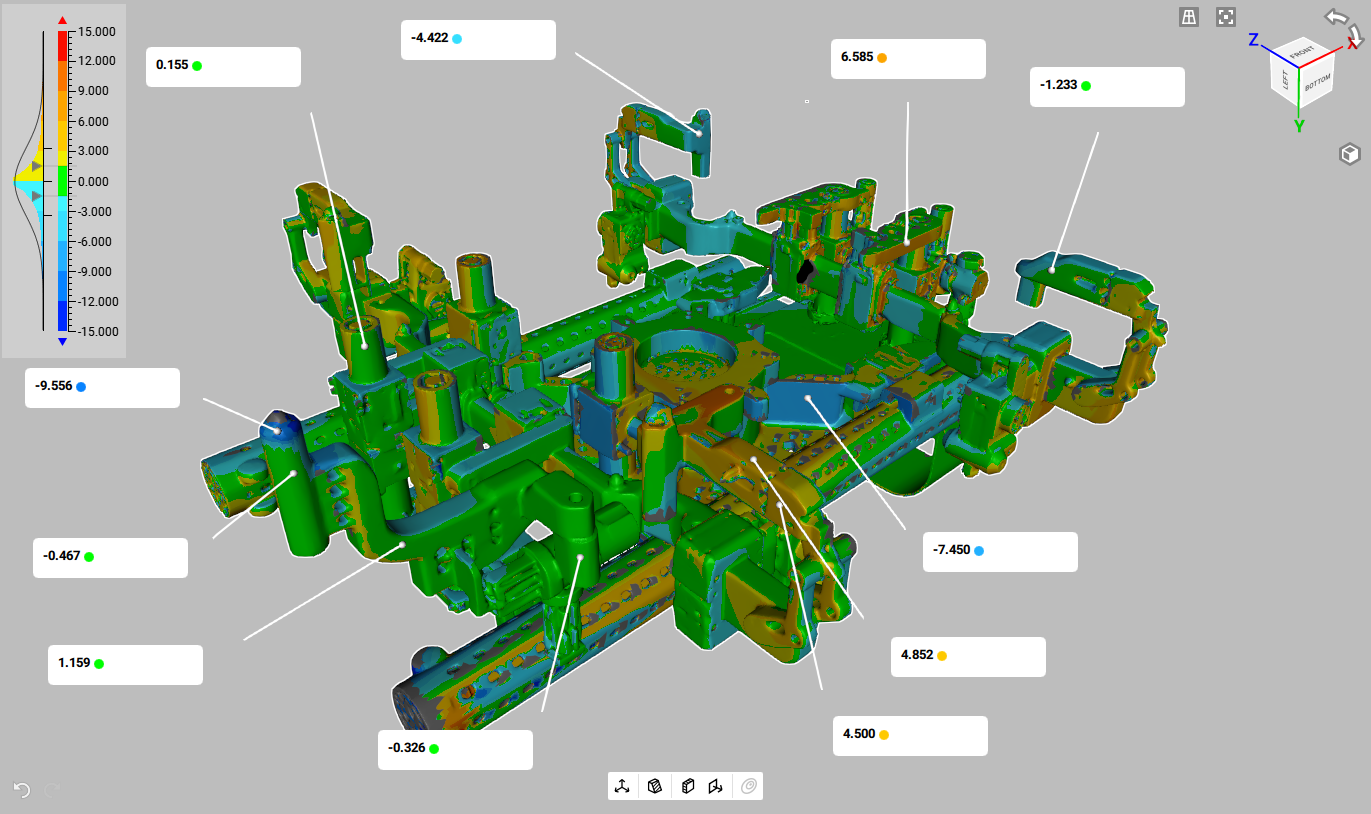
- Use colour deviation maps to isolate root cause
- Validate corrective action before restarting production
This approach focuses on change detection, not nominal measurement.
What will you get in the playbook?
- Step-by-step inspection workflow
- Golden 3D scan best-practice guidelines
- Fixture & gripper inspection checklist
- Colour deviation map interpretation guide
- Decision flow for corrective action and validation